In the bustling world of mobile gaming, a quiet revolution is underway. Developers are turning their attention to the vast libraries of classic games, reimagining them for the on-the-go lifestyle of modern players. This trend, often referred to as the "commuterization" of games, involves more than just porting old titles to new devices. It's a thoughtful process of adaptation, where the essence of the original experience is preserved while making it accessible and enjoyable in short, sporadic sessions—perfect for a train ride, a lunch break, or waiting in line.
The challenge is significant. Classic games were often designed for dedicated gaming consoles or PCs, with precise controls and longer play sessions in mind. Translating these experiences to touchscreens, which lack tactile feedback and are prone to imprecise inputs, requires ingenuity. Developers must rethink control schemes, interface design, and even game mechanics to ensure that the magic of the original isn't lost in translation. It's a delicate balance between nostalgia and practicality, one that can make or break a beloved title's second life.
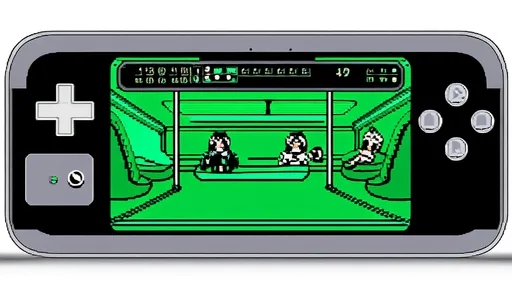
One of the most critical aspects of this transformation is the optimization of controls. Touchscreens are inherently different from physical buttons and joysticks, and what worked on a console may feel clunky or unresponsive on a smartphone. To address this, many developers are implementing customizable virtual controls, gesture-based inputs, and even context-sensitive interfaces that simplify interactions without dumbing down the gameplay. For example, a complex fighting game might be adapted with swipe gestures for special moves, while a platformer could use auto-run features to reduce the need for constant screen tapping.
Beyond controls, the structure of the games themselves is often modified to suit mobile play patterns. Classic games frequently featured long levels, limited saves, and high difficulty curves—elements that can be frustrating when playing in short bursts. To make these games more commuter-friendly, developers are introducing checkpoints, adjustable difficulty settings, and bite-sized missions. These changes allow players to make meaningful progress even during a brief session, without feeling penalized for their limited time.
Visual and audio adjustments also play a key role in the commuterization process. Small screens and often noisy environments mean that details must be sharpened, text enlarged, and sound design optimized for headphones or lower volumes. Many remastered classics feature updated graphics that retain the art style of the original while ensuring clarity on high-resolution displays. Similarly, audio cues might be made more distinct or supplemented with visual indicators to accommodate players who are gaming in public spaces without sound.
The business model behind these adaptations is another area of innovation. While some classic games are sold as premium titles, many are adopting free-to-play or ad-supported models to reach a broader audience. This shift can influence design decisions, such as the inclusion of energy systems, optional ads for rewards, or in-app purchases for cosmetics and conveniences. However, the best adaptations ensure that these monetization strategies don't undermine the core experience, instead integrating them in ways that feel natural and non-intrusive.
Despite the technical and design challenges, the rewards of successfully commuterizing a classic game are substantial. For developers, it's an opportunity to introduce iconic titles to new generations of players and generate revenue from existing intellectual property. For players, it's a chance to revisit beloved games in a new context or discover gems they might have missed. Moreover, these adaptations often spark renewed interest in the original versions, fostering a broader appreciation for gaming history.
Looking ahead, the trend of commuterization shows no signs of slowing down. As mobile hardware continues to improve, capable of handling more complex games, and as cloud gaming reduces the limitations of device storage and processing power, the line between classic and modern gaming will blur even further. The future may see even deeper integrations, such as cross-platform saves that allow players to seamlessly switch between mobile and other devices, making classic games more accessible than ever.
In conclusion, the commuterization of classic games is a testament to the enduring appeal of these titles and the creativity of developers in adapting them for new contexts. By thoughtfully optimizing controls, structure, and presentation, they are ensuring that these beloved experiences remain relevant and enjoyable in the fast-paced, mobile-centric world of today. For gamers, it means that the classics are always within reach, ready to provide a moment of escape or excitement wherever they are.

By /Aug 26, 2025

By /Aug 26, 2025

By /Aug 26, 2025

By /Aug 26, 2025

By /Aug 26, 2025

By /Aug 26, 2025
By /Aug 26, 2025

By /Aug 26, 2025
By /Aug 26, 2025

By /Aug 26, 2025
By /Aug 26, 2025
By /Aug 26, 2025

By /Aug 26, 2025

By /Aug 26, 2025

By /Aug 26, 2025
By /Aug 26, 2025

By /Aug 26, 2025
By /Aug 26, 2025
By /Aug 26, 2025

By /Aug 26, 2025
