The Evolution of Graph Computing in Social Networks and Recommendations

Aug 26, 2025 By

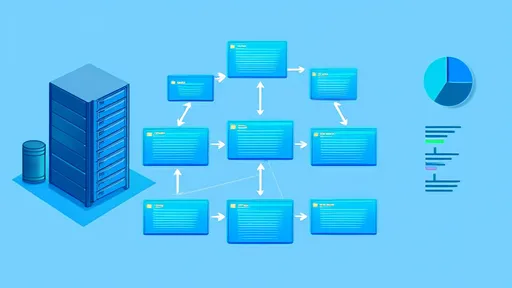
The evolution of graph computing in social networks and recommendation systems represents one of the most significant technological narratives of the past decade. What began as academic curiosity has matured into a foundational component of modern digital ecosystems, driving everything from friend suggestions to content personalization. The journey has been marked by both theoretical breakthroughs and practical innovations, reshaping how platforms understand and leverage interconnected data.

In the early days, social networks operated on relatively simple algorithms. Platforms like Friendster and MySpace used basic graph structures to map friendships, but the computational depth was limited. Recommendations were often based on explicit connections or rudimentary similarity metrics. The real turning point came when researchers and engineers recognized that the value wasn't just in the nodes—the users—but in the edges and their properties. This shift in perspective unlocked deeper insights into user behavior, preferences, and latent relationships.

As social networks scaled to millions and then billions of users, traditional relational databases struggled to keep pace. The need to traverse complex networks efficiently led to the adoption of graph databases and specialized graph processing frameworks. Technologies like Neo4j, Apache Giraph, and later, distributed systems such as Apache Spark's GraphX, emerged to handle the computational load. These tools enabled platforms to perform sophisticated analyses, like identifying communities, detecting influencers, and mapping information flow across networks.

Parallel to these developments, recommendation engines evolved from collaborative filtering to graph-based methods. Early systems relied heavily on user-item interaction matrices, but they often missed the contextual nuances captured by graph structures. By incorporating social graphs, platforms could leverage homophily—the tendency of similar users to connect—to improve suggestions. For instance, if two users were closely connected and shared interests, recommending content from one to the other became more intuitive and effective.

The integration of machine learning with graph computing marked another leap forward. Graph neural networks (GNNs) and embedding techniques like Node2Vec allowed systems to learn low-dimensional representations of nodes and edges, capturing topological features in a way that pure algorithmic approaches couldn't. This fusion enabled more accurate predictions, from link prediction in social networks to personalized content recommendations based on multidimensional user graphs.

Today, graph computing is indispensable in social and recommendation contexts. Platforms like Facebook, Twitter, and LinkedIn use it to power features like "People You May Know" and "Jobs You Might Be Interested In." E-commerce giants like Amazon and Netflix rely on graph-based systems to suggest products and movies, often incorporating temporal and behavioral data to keep recommendations fresh and relevant. The real-time aspect has also become critical; streaming graph processing allows platforms to update recommendations instantaneously as users interact with the system.

Looking ahead, the evolution continues with trends like federated learning on graphs, which aims to preserve privacy while leveraging distributed data, and the use of knowledge graphs to incorporate external information into recommendations. As quantum computing advances, it may eventually offer new paradigms for graph processing, though that remains on the horizon. For now, the focus is on making graph systems more scalable, interpretable, and ethical—especially as concerns grow about filter bubbles and algorithmic bias.

In summary, the story of graph computing in social networks and recommendation systems is one of constant adaptation. From humble beginnings to its current role as a backbone of digital experience, it has continually evolved to meet the demands of scale, complexity, and user expectation. Its future will likely be just as dynamic, driven by innovations that we can only begin to imagine.

Recommend Posts
IT

Automated Machine Learning (AutoML) and Collaborative Platforms for Data Science Workflows

By /Aug 26, 2025

The landscape of data science is undergoing a profound transformation, shifting from isolated, manual processes toward integrated, automated, and collaborative ecosystems. At the heart of this evolution lies the convergence of Automated Machine Learning, or AutoML, with sophisticated collaboration platforms. This synergy is not merely a technological trend but a fundamental reimagining of how organizations derive value from data, democratizing advanced analytics and fostering a culture of shared insight and iterative innovation.
IT

Automated Extraction and Tagging of Unstructured Data (e.g., Images, Videos)

By /Aug 26, 2025

In the sprawling digital landscape of the 21st century, unstructured data—images, videos, audio clips, and more—has become the lifeblood of modern enterprises and creative endeavors alike. This explosion of visual and auditory content is both a goldmine and a formidable challenge. How do we sift through terabytes of pixels and soundwaves to find meaning, to organize, to understand? The answer lies in the rapidly evolving field of automated extraction and tagging, a technological frontier where artificial intelligence is not just an assistant but the very engine of discovery.
IT

The Convergence of Data Fabric and Data Mesh

By /Aug 26, 2025

In the rapidly evolving landscape of data architecture, two paradigms have emerged as frontrunners in addressing the complexities of modern data ecosystems: Data Fabric and Data Mesh. While each approach offers distinct advantages, the convergence of these methodologies is increasingly being recognized as a powerful strategy for organizations aiming to harness their data's full potential. This fusion represents not merely a technical integration but a philosophical alignment that addresses both the structural and cultural challenges inherent in large-scale data management.
IT

Optimization of Computational Scheduling and Resource Isolation in Big Data Clusters

By /Aug 26, 2025

In the rapidly evolving landscape of big data processing, the optimization of computational resource scheduling and isolation within clusters has emerged as a critical frontier for enterprises seeking to maximize efficiency and maintain competitive advantage. As data volumes continue to explode and analytical workloads grow increasingly complex, the traditional approaches to managing cluster resources are proving inadequate. The stakes are high; inefficient scheduling can lead to significant resource wastage, increased operational costs, and sluggish performance, while poor isolation can result in noisy neighbor problems, security vulnerabilities, and unpredictable application behavior.
IT

The Evolution of Graph Computing in Social Networks and Recommendations

By /Aug 26, 2025

The evolution of graph computing in social networks and recommendation systems represents one of the most significant technological narratives of the past decade. What began as academic curiosity has matured into a foundational component of modern digital ecosystems, driving everything from friend suggestions to content personalization. The journey has been marked by both theoretical breakthroughs and practical innovations, reshaping how platforms understand and leverage interconnected data.
IT

New Dimensions in Performance Benchmarking for Vector Databases

By /Aug 26, 2025

The landscape of data management is undergoing a seismic shift, moving beyond the rigid confines of traditional relational systems into the fluid, high-dimensional realm of vector databases. As enterprises increasingly deploy AI and machine learning models in production, the demand for specialized databases capable of understanding and querying data by its meaning, rather than by exact matches, has exploded. This surge has, in turn, ignited a fierce competition among vendors, making performance benchmarking more critical—and more complex—than ever before. The old yardsticks of transactions per second and query latency are no longer sufficient; a new, more nuanced set of dimensions is required to truly gauge the capabilities of a modern vector database.
IT

The Practical Value of Data Contracts in Data Governance

By /Aug 26, 2025

In the ever-evolving landscape of data management, organizations are increasingly recognizing the critical role of structured frameworks to ensure data quality, consistency, and trustworthiness. Among these frameworks, the concept of a Data Contract has emerged as a foundational element in modern data governance strategies. Unlike traditional approaches that often treat data quality as an afterthought, Data Contracts introduce a proactive, agreement-based mechanism that defines the expectations and responsibilities between data producers and consumers. This paradigm shift is not merely a technical adjustment but a cultural one, fostering collaboration and accountability across teams.
IT

Active Metadata Management Capabilities of Data Catalog

By /Aug 26, 2025

In today's data-driven landscape, organizations are increasingly recognizing that traditional metadata management approaches no longer suffice. The exponential growth of data assets across hybrid environments has created unprecedented complexity in data discovery, governance, and utilization. This challenge has given rise to a transformative approach known as active metadata management, which represents a fundamental shift from passive documentation to intelligent, action-oriented metadata utilization.
IT

Real-time Data Lake: Unified Stream and Batch Processing

By /Aug 26, 2025

The landscape of data processing has undergone a profound transformation with the emergence of the real-time data lake, a paradigm that merges the historical depth of data warehousing with the immediacy of stream processing. This evolution represents more than just a technical shift; it is a fundamental rethinking of how organizations harness data for competitive advantage. At the heart of this revolution lies the concept of unified batch and stream processing—often termed stream-batch integration—which is rapidly becoming the cornerstone of modern data architecture.
IT

Management and Operation Framework for Data Products

By /Aug 26, 2025

In today's data-driven economy, organizations are increasingly recognizing that raw data alone holds limited value without proper structure and strategic deployment. The emergence of data products represents a fundamental shift in how enterprises leverage their information assets, transforming fragmented datasets into scalable, actionable solutions. These products are not merely databases or dashboards but are engineered offerings designed to solve specific business problems, drive decision-making, and create tangible value for both internal stakeholders and external customers.
IT

Strategies for Introducing Memory-Safe Languages (like Rust) in Large Projects

By /Aug 26, 2025

The adoption of memory-safe languages like Rust in large-scale software projects has become a strategic imperative for organizations aiming to enhance security, performance, and long-term maintainability. As systems grow in complexity and the threat landscape evolves, the inherent vulnerabilities of traditional languages like C and C++ have prompted a shift toward languages designed with memory safety as a core principle. Rust, in particular, has emerged as a leading choice due to its unique ownership model, zero-cost abstractions, and growing ecosystem. This article explores the strategies, challenges, and benefits of integrating Rust into existing large projects, drawing insights from industry practices and real-world implementations.
IT

Technical Requirements and Compliance Challenges of Cybersecurity Insurance

By /Aug 26, 2025

The landscape of cybersecurity insurance is undergoing a profound transformation, driven by escalating digital threats and a rapidly evolving regulatory environment. Insurers are no longer passive risk-takers; they have become active participants in shaping the cybersecurity posture of their clients. The technical requirements to even qualify for a policy have become stringent, moving beyond simple checkbox questionnaires to deep, evidence-based assessments of an organization's digital defenses. This shift represents a fundamental change in how businesses must approach their security infrastructure, not as a cost center but as a core component of their financial and operational resilience.
IT

Optimizing Security Team Efficiency with Vulnerability Priority Technology (VPT)

By /Aug 26, 2025

In the ever-evolving landscape of cybersecurity, organizations are constantly seeking methodologies to enhance the efficiency and effectiveness of their security teams. One approach that has gained significant traction is Vulnerability Priority Technology (VPT), a framework designed to intelligently prioritize vulnerabilities based on risk, context, and potential impact. By moving beyond traditional Common Vulnerability Scoring System (CVSS) scores, VPT offers a more nuanced and actionable pathway for security operations, enabling teams to focus their efforts where they matter most.
IT

Behavior-based Anomaly Access Detection in Zero Trust Networks"

By /Aug 26, 2025

The digital landscape has undergone a seismic shift. The traditional perimeter-based security model, once the bastion of network defense, is crumbling under the weight of cloud migration, remote workforces, and sophisticated cyber threats. In this new era, the principle of "never trust, always verify" has emerged as the cornerstone of modern cybersecurity. This is the world of Zero Trust, a paradigm that assumes breach and verifies each request as though it originates from an untrusted network. Within this framework, one of the most critical and dynamic capabilities is behavioral-based anomaly detection for access requests, a sophisticated layer of defense that moves beyond static credentials to understand the very rhythm of user and entity behavior.
IT

Identity Fabric: The Concept and Unified Identity Management

By /Aug 26, 2025

In today's rapidly evolving digital landscape, organizations face unprecedented challenges in managing identities across diverse systems and platforms. The concept of Identity Fabric has emerged as a transformative approach to address these complexities, offering a cohesive framework for unified identity management. This innovative model goes beyond traditional siloed solutions, weaving together disparate identity systems into a seamless, interoperable whole that enhances security, improves user experience, and streamlines administrative processes.
IT

Technical Principles and Effectiveness Analysis of Ransomware Decryption Tools

By /Aug 26, 2025

The digital landscape has become a battleground, with ransomware emerging as one of the most pernicious threats to organizations and individuals alike. In this constant arms race between cybercriminals and defenders, ransomware decryption tools represent a critical line of defense. These specialized software applications are designed to reverse the damage inflicted by file-encrypting malware, offering a beacon of hope to victims who have not maintained adequate backups or who face exorbitant ransom demands. The very existence of these tools is a testament to the relentless work of cybersecurity researchers, law enforcement agencies, and ethical hackers who analyze malicious code to find and exploit its weaknesses.
IT

Developing a Migration Roadmap for Quantum-Safe Cryptography

By /Aug 26, 2025

The digital world stands at a precipice, a silent countdown ticking away beneath the foundational protocols that secure our most sensitive communications. For decades, the cryptographic algorithms safeguarding everything from financial transactions to state secrets have relied on the computational difficulty of mathematical problems like integer factorization and discrete logarithms. This entire edifice, however, is threatened by the advent of quantum computing. The specter of a cryptographically relevant quantum computer (CRQC)—a machine capable of running Shor’s algorithm—promises to render these widely used public-key cryptosystems obsolete overnight. In response to this existential threat, the global cryptographic community has embarked on a monumental endeavor: the migration to quantum-safe cryptography, a complex and urgent journey detailed in evolving migration roadmaps.
IT

Dynamic Access Control Strategy Generation Driven by Artificial Intelligence

By /Aug 26, 2025

In the rapidly evolving landscape of cybersecurity, organizations are increasingly turning to advanced solutions to safeguard their digital assets. Among these, artificial intelligence-driven dynamic access control strategies have emerged as a transformative approach, redefining how permissions are managed and enforced in real-time. Unlike traditional static models that rely on predefined rules, these dynamic systems leverage AI to continuously assess risk, adapt to changing contexts, and make intelligent decisions about access rights. This shift not only enhances security but also improves operational efficiency by reducing manual interventions and responding proactively to potential threats.
IT

Automated Generation and Security Auditing of Software Bill of Materials (SBOM)

By /Aug 26, 2025

In the rapidly evolving landscape of cybersecurity, the automation of Software Bill of Materials (SBOM) generation and its integration into security auditing processes has emerged as a critical frontier for organizations worldwide. As software supply chains grow increasingly complex, the ability to automatically catalog every component within an application has transformed from a theoretical ideal to an operational necessity. This shift represents more than just technological advancement—it signifies a fundamental change in how we approach software transparency, risk management, and regulatory compliance.
IT

Confidential Computing: Implementing Hardware Trust Roots

By /Aug 26, 2025

In the rapidly evolving landscape of digital security, Confidential Computing has emerged as a transformative approach to protecting data in use. At its core lies the concept of leveraging hardware-based trust roots to create isolated, secure environments where sensitive computations can occur away from potential threats. This practice represents a significant shift from traditional security models that primarily focus on protecting data at rest or in transit, addressing the critical vulnerability of data exposure during processing.